
 In today’s competitive business environment, having a good product or service is not enough. Businesses need to understand their customers, communicate the right message, choose the right marketing channels, and continuously measure their results.
A marketing strategy provides a clear direction for how a business will attract potential customers, build relationships, increase sales, and achieve its business goals. Whether you are running a small local business, an online store, a startup, or a large company, having the right marketing strategy can make a significant difference.
With the growth of digital platforms, businesses now have more opportunities to reach their target audience through search engines, social media, websites, email, paid advertising, content, and other channels.
In this article, let’s understand what a marketing strategy is, why it is important, the different types of marketing strategies, and how you can create an effective strategy for your business.
What Is a Marketing Strategy?
A marketing strategy is a long-term plan that explains how a business will reach its target customers and turn them into customers.
It involves understanding the market, identifying the target audience, analyzing competitors, defining marketing objectives, selecting appropriate marketing channels, creating valuable content, and measuring performance.
In simple words:
A marketing strategy answers three important questions:
- Who are your customers?
- What do they need?
- How can your business reach and convince them?
For example, imagine a local clothing business wants to increase online sales. Instead of randomly posting on social media, the business can create a strategy that identifies its ideal customers, studies competitors, creates relevant content, optimizes its website for search engines, runs social media campaigns, and uses paid advertising.
That structured approach is a marketing strategy.
Why Is a Marketing Strategy Important?
A business can spend a lot of money on marketing without getting meaningful results if there is no clear strategy.
A good marketing strategy helps businesses make better decisions and use their resources effectively.
1. Helps You Understand Your Customers
A strategy begins with understanding the target audience.
You need to know their:
- Age
- Location
- Interests
- Problems
- Buying behavior
- Needs and expectations
- Preferred communication channels
Understanding your customers allows you to create marketing messages that are more relevant to them.
2. Creates Clear Marketing Goals
Without goals, it becomes difficult to determine whether your marketing efforts are successful.
Your goals could include:
- Increasing website traffic
- Generating leads
- Increasing online sales
- Improving brand awareness
- Growing social media followers
- Increasing customer retention
3. Helps You Compete Effectively
Competitor research is another important part of marketing strategy.
By studying competitors, you can identify:
- What they are doing well
- Where they are weak
- What customers like about them
- Their pricing and offers
- Their content strategy
- Their advertising approach
- Opportunities they may be missing
This information can help your business develop a stronger market position.
4. Improves Return on Investment
Marketing without a strategy can result in wasted time and money.
A well-planned strategy allows you to identify which activities generate the best results and allocate your resources accordingly.
Major Types of Marketing Strategies
There are many different types of marketing strategies. Businesses often combine several of them depending on their goals and target audience.
1. Digital Marketing Strategy
A digital marketing strategy focuses on reaching customers through online channels.
It can include:
- Search Engine Optimization (SEO)
- Social media marketing
- Content marketing
- Email marketing
- Google Ads
- Social media advertising
- Influencer marketing
- Website marketing
For many modern businesses, digital marketing has become an essential part of their overall marketing strategy.
2. Content Marketing Strategy
Content marketing focuses on creating useful and relevant content for your target audience.
Examples include:
- Blog posts
- Videos
- Infographics
- Social media posts
- Guides
- Case studies
- E-books
- Podcasts
The objective is not simply to promote a product but to provide information that helps customers solve problems and make purchasing decisions.
3. Social Media Marketing Strategy
Social media marketing uses platforms such as Instagram, Facebook, LinkedIn, YouTube, and other social networks to connect with customers.
A social media strategy may include:
- Content planning
- Posting schedules
- Reels and short videos
- Community engagement
- Influencer collaborations
- Paid advertisements
- Performance tracking
The key is to create content that matches both the platform and the audience.
4. SEO Strategy
Search Engine Optimization helps a website appear in search engine results when people search for relevant terms.
An SEO strategy can include:
- Keyword research
- On-page SEO
- Technical SEO
- Content creation
- Internal linking
- Local SEO
- Backlink building
For example, a bakery in Kochi might optimize its website for searches related to “best bakery in Kochi” or other relevant local searches.
5. Email Marketing Strategy
Businesses can use email to:
- Share offers
- Introduce new products
- Send newsletters
- Welcome new customers
- Recover abandoned purchases
- Build customer relationships
Email marketing can be especially useful for businesses that want to maintain relationships with existing customers.
6. Influencer Marketing Strategy
Influencer marketing involves collaborating with individuals who have an established audience in a particular niche.
For example, a beauty brand may collaborate with beauty creators to demonstrate its products.
The success of influencer marketing depends not only on follower count but also on audience relevance, trust, engagement, and content quality.
Key Elements of a Successful Marketing Strategy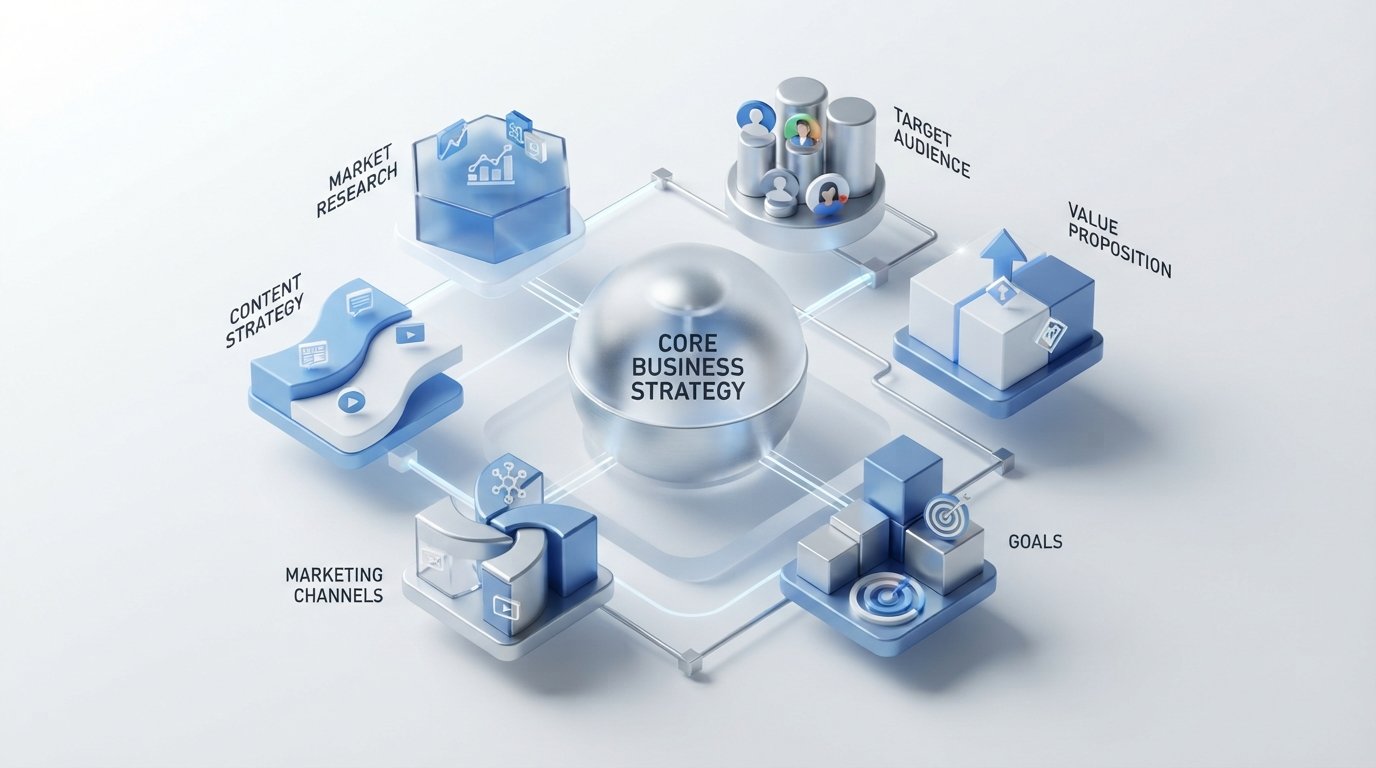
A strong marketing strategy usually contains several important elements.
1. Market Research
Before creating a strategy, understand the market.
Research:
- Industry trends
- Customer needs
- Market demand
- Competitors
- Pricing
- Consumer behavior
Good research reduces guesswork.
2. Target Audience
You cannot effectively market to everyone.
Define your ideal customer based on factors such as:
Demographics:
Age, gender, location, occupation, income, education.
Psychographics:
Interests, lifestyle, values, preferences, and motivations.
Behavior:
Purchasing habits, preferred platforms, brand loyalty, and buying frequency.
Creating a detailed buyer persona can make your marketing more focused.
3. Unique Value Proposition
Your business needs a clear reason why customers should choose you instead of competitors.
Ask:
What makes your product or service different?
It could be:
- Better quality
- Affordable pricing
- Faster delivery
- Better customer service
- Unique features
- Convenience
- Specialized expertise
Your value proposition should be simple and easy for customers to understand.
4. Marketing Goals
Set specific and measurable objectives.
A useful approach is the SMART framework:
- S – Specific
- M – Measurable
- A – Achievable
- R – Relevant
- T – Time-bound
Instead of saying:
“I want more website traffic.”
A better goal would be:
“Increase organic website traffic by 30% within six months.”
5. Marketing Channels
Choose channels based on your audience and objectives.
You might use:
- Google Search
- Website
- YouTube
- Paid advertising
The goal is not to be everywhere. The goal is to be where your customers are.
6. Content Strategy
Your content should support your overall marketing goals.
A good content strategy can include different types of content:
Educational content – teaches customers something useful.
Entertaining content – captures attention and encourages engagement.
Promotional content – communicates products, offers, and services.
Trust-building content – reviews, testimonials, case studies, and behind-the-scenes content.
A balanced content mix can help move people from awareness to consideration and eventually to purchase.
How to Create a Marketing Strategy Step by Step
Creating a marketing strategy doesn’t have to be complicated.
Step 1: Analyze Your Current Position
Understand where your business currently stands.
Look at:
- Website performance
- Social media presence
- Search rankings
- Existing customers
- Sales
- Competitors
- Previous marketing campaigns
You can also perform a SWOT analysis by identifying your strengths, weaknesses, opportunities, and threats.
Step 2: Define Your Target Audience
Create a clear profile of your ideal customer.
Think about who is most likely to need your product or service and why they would buy it.
Step 3: Set Your Goals
Decide what you want your marketing efforts to achieve.
For example:
- More leads
- More sales
- Better brand awareness
- More website visitors
- Higher customer retention
Step 4: Choose Your Marketing Channels
Select channels that are relevant to your audience.
Don’t choose a platform simply because it is popular. Choose it because your potential customers are using it.
Step 5: Create Your Content Plan
Plan what you will publish, where you will publish it, and how frequently you will publish it.
For example:
Monday: Educational social media post
Wednesday: Blog article
Friday: Short-form video
Sunday: Promotional post
The exact schedule depends on your business and resources.
Step 6: Set Your Budget
Determine how much you can invest in:
- Advertising
- Content creation
- SEO
- Tools
- Influencers
- Freelancers or agencies
Start with a realistic budget and adjust it based on performance.
Step 7: Measure Your Results
Marketing should always be measured.
Important metrics can include:
- Website traffic
- Leads
- Conversion rate
- Cost per lead
- Customer acquisition cost
- Sales
- Return on ad spend
- Social media engagement
- Email open and click rates
Step 8: Improve Your Strategy
A marketing strategy should not remain unchanged forever.
Analyze your results, identify what works, stop activities that are not producing results, and test new approaches.
Marketing is a continuous process of testing, learning, and improving.
Marketing Strategy vs Marketing Plan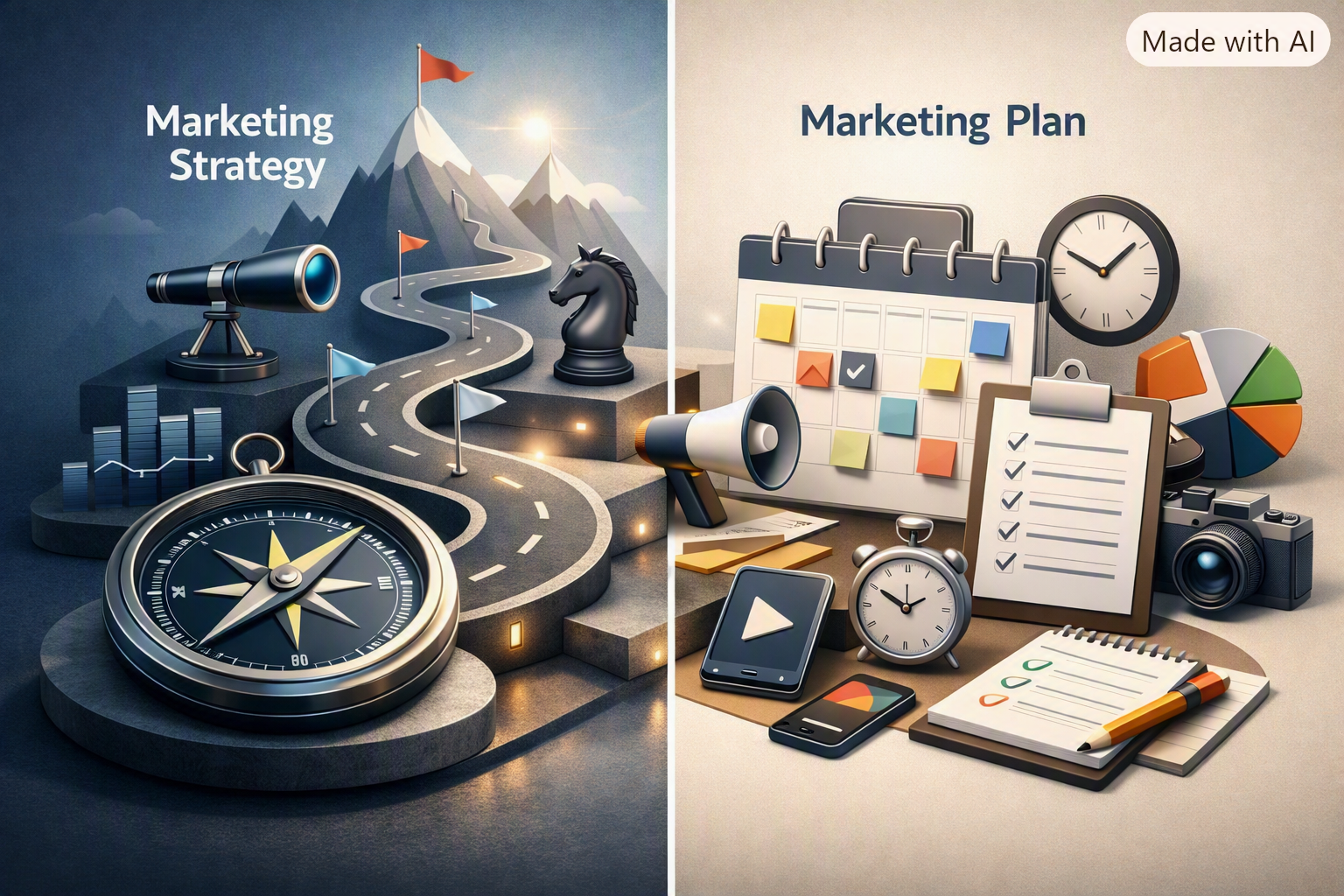
These two terms are often confused.
A marketing strategy focuses on the overall direction.
It answers:
“How are we going to achieve our marketing objectives?”
A marketing plan focuses more on the specific actions and execution.
It answers:
“What are we going to do, when are we going to do it, and who will do it?”
For example:
Strategy: Increase online visibility among young customers.
Plan:
- Publish three Instagram Reels every week.
- Create two SEO blogs per month.
- Run targeted social media advertisements.
- Collaborate with relevant creators.
In simple terms, the strategy provides the direction, while the plan describes the actions.
Common Marketing Strategy Mistakes
Even businesses with good products can struggle because of poor marketing decisions.
Marketing to Everyone
Trying to target everyone often results in unclear messaging.
Focusing Only on Selling
Constantly promoting products can make customers lose interest. Provide useful content as well.
Ignoring SEO
A strong website is not enough if potential customers cannot find it through search engines.
Not Tracking Results
If you don’t measure your campaigns, you won’t know what is working.
Copying Competitors
Competitor research is useful, but simply copying another business rarely creates a strong brand identity.
Changing Strategies Too Quickly
Some marketing activities, particularly SEO and content marketing, may take time to produce meaningful results. Give strategies enough time while still monitoring performance.
Example of a Simple Marketing Strategy
Let’s take a fictional online organic food business.
Objective
Increase online orders and brand awareness.
Target Audience
Health-conscious consumers living in urban areas.
Strategy
Use a combination of SEO, social media, content marketing, email marketing, and paid advertising.
Content
Create:
- Healthy food blogs
- Recipe videos
- Product information
- Customer testimonials
- Farm and sourcing stories
- Educational social media posts
Paid Marketing
Run targeted search and social media campaigns focused on relevant audiences.
Measurement
Track:
- Website traffic
- Product page visits
- Online orders
- Conversion rate
- Advertising costs
- Customer acquisition cost
This gives the business a structured approach rather than relying on random promotional activities.
 Final Thoughts
A successful marketing strategy is not simply about advertising a product. It is about understanding customers, identifying opportunities, communicating value, selecting the right channels, and continuously improving based on data.
Whether you are a small business owner, startup founder, freelancer, or marketing professional, having a clear strategy can help you use your time and budget more effectively.
The most important thing is to start with your customer. Understand what they need, identify the problems you can solve, communicate your value clearly, and measure the results of your efforts.
A good marketing strategy gives your business direction. A great marketing strategy combines that direction with consistent execution, measurement, and improvement.