
People today consume more video content than ever before. From educational tutorials and product reviews to entertainment and business content, video has become an important part of how people discover information and make purchasing decisions.
Among the many video platforms available, YouTube remains one of the most powerful channels for businesses, creators, and marketers. With the right strategy, companies can use YouTube not only to generate views but also to build brand awareness, attract potential customers, and create long-term relationships with their audience.
This is where YouTube video marketing becomes important.
YouTube video marketing involves creating, publishing, optimizing, and promoting videos to reach a specific target audience and achieve marketing goals. Whether you are a small business, startup, freelancer, or established brand, YouTube Video Marketing can become an effective part of your digital marketing strategy.
In this guide, we will explore what YouTube video marketing is, why it matters, its benefits, different types of videos, SEO strategies, and practical tips for creating successful YouTube campaigns.
What Is YouTube Video Marketing?
YouTube video marketing is the practice of using YouTube videos to promote a business, product, service, personal brand, or idea.
Instead of relying only on traditional advertisements, businesses can create useful and engaging videos that provide value to their audience.
For example, a company could create:
- Product demonstration videos
- How-to tutorials
- Customer testimonials
- Educational videos
- Behind-the-scenes content
- Product comparison videos
- Company introduction videos
- Short-form videos
- Live streams
- Industry-related content
The main objective is not simply to get views. A successful YouTube Video Marketing strategy should help a business attract the right audience and guide viewers toward meaningful actions such as visiting a website, subscribing to a channel, contacting the business, or purchasing a product.
Why Is YouTube Video Marketing Important?
YouTube has developed from a simple video-sharing platform into an important search and discovery channel.
People use YouTube to learn new skills, research products, compare services, find solutions to problems, and discover brands.
This creates an opportunity for businesses to reach potential customers when they are actively looking for information.
Another advantage is the long-term value of video content. Unlike some forms of advertising that stop producing results when the campaign ends, a useful YouTube video can continue attracting viewers through search and recommendations over time.
For businesses, this makes YouTube video marketing a valuable combination of content marketing, search marketing, and brand building.
Benefits of YouTube Video Marketing
1. Increases Brand Awareness
Video allows businesses to showcase their personality, products, services, and values in a more engaging way.
Consistent publishing can help people become familiar with your brand and remember it when they need a product or service you provide.
2. Builds Trust With Your Audience
Customers often want to understand a business before making a purchase.
Videos can show how a product works, introduce the people behind a company, answer common questions, and demonstrate expertise.
This can make a brand feel more authentic and trustworthy.
3. Drives Website Traffic
YouTube videos can direct viewers toward your website through descriptions, calls to action, channel information, and other relevant links.
For example, a tutorial can educate viewers about a problem and then encourage interested users to visit your website for additional information.
4. Supports SEO
YouTube is closely connected to search behavior. Optimizing your videos around topics people are searching for can increase their chances of being discovered.
Using relevant keywords in titles, descriptions, spoken content, and supporting information can help search engines understand what your video is about.
5. Generates Leads
Videos can be designed to encourage specific actions.
Depending on your business, a call to action could ask viewers to:
- Visit your website
- Download a resource
- Sign up for a service
- Request a consultation
- Contact your business
- Subscribe to your channel
6. Creates Long-Term Content Assets
A well-made video can continue attracting viewers long after it is published.
This makes YouTube particularly useful for evergreen content such as tutorials, guides, educational videos, and frequently asked questions.
Types of YouTube Videos Businesses Can Create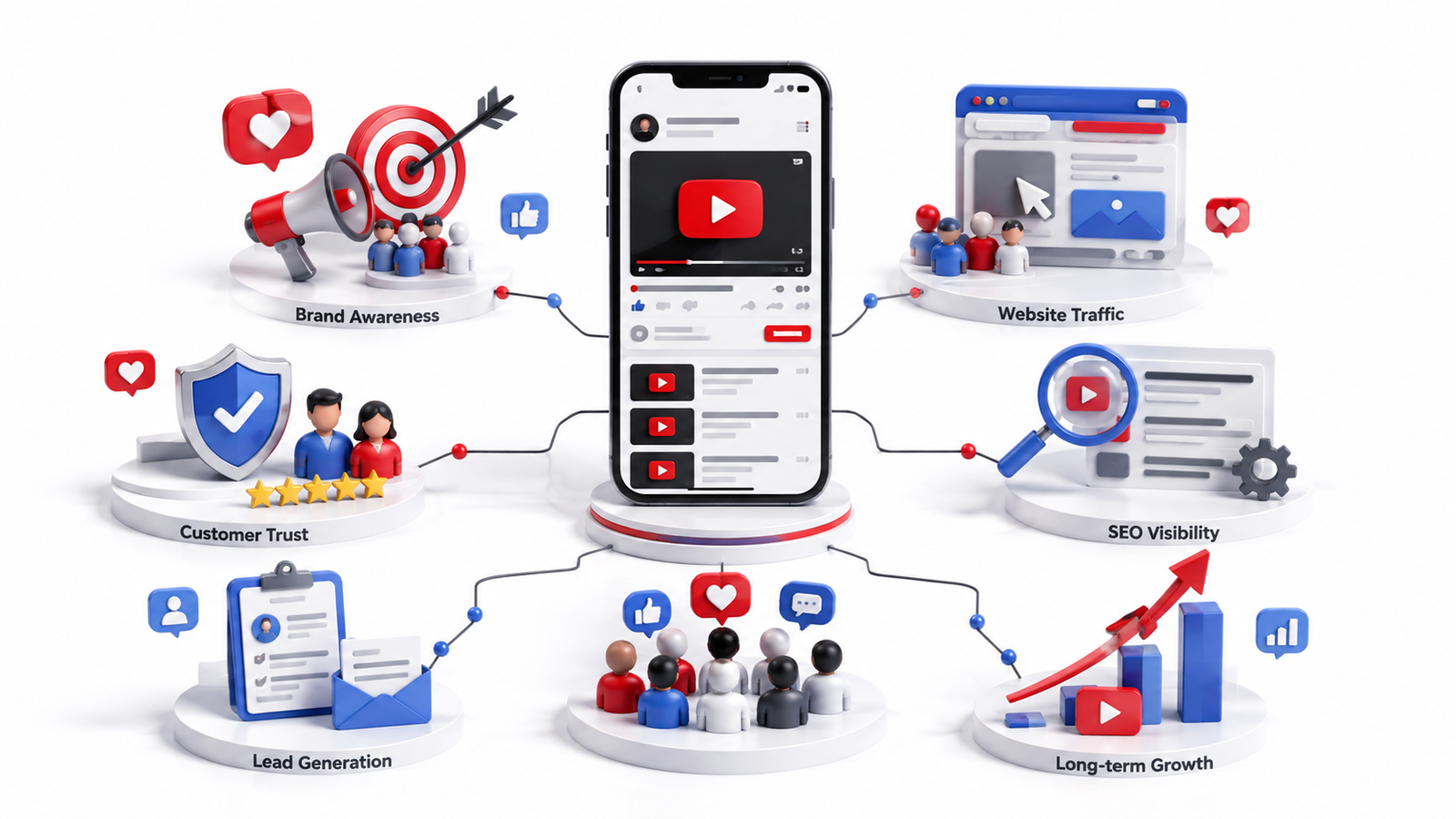
Choosing the right type of video depends on your audience and marketing objectives.
Educational Videos
Educational content helps viewers understand a topic or solve a problem.
For example, a digital marketing agency could create videos explaining SEO, social media marketing, or content marketing.
How-To Videos
How-to content is useful because it focuses on solving a specific problem.
Examples include:
- How to create a YouTube channel
- How to optimize a website
- How to edit a marketing video
- How to create social media content
Product Demonstrations
Product demonstration videos show potential customers how a product works.
Instead of simply telling customers about product features, you can visually demonstrate their practical benefits.
Customer Testimonials
Customer testimonial videos can provide social proof.
Real experiences can help potential customers understand how a product or service has helped others.
Behind-the-Scenes Videos
Behind-the-scenes content gives viewers a look at the people, processes, and culture behind a brand.
This can make your business more relatable.
YouTube Shorts
Short-form videos are useful for delivering quick information, tips, ideas, or entertainment.
Businesses can use Shorts to attract new viewers and introduce them to longer-form content.
Live Videos
Live streaming can help brands interact directly with their audience.
Businesses can use live videos for:
- Product launches
- Q&A sessions
- Interviews
- Demonstrations
- Events
- Educational sessions
How to Create an Effective YouTube Video Marketing Strategy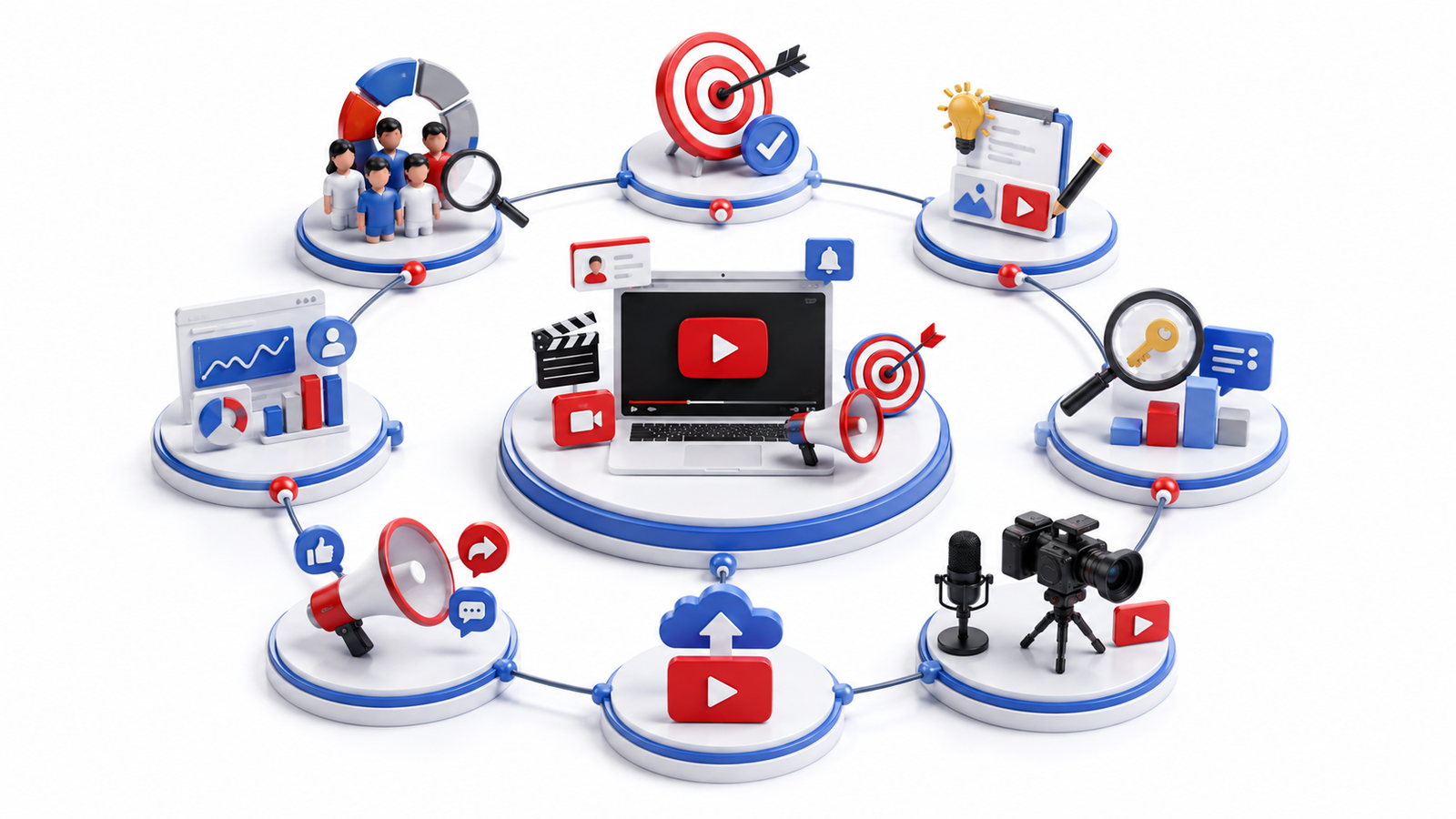
Creating random videos is unlikely to produce consistent results. A clear strategy can make your content more focused and effective.
1. Define Your Target Audience
Before creating a video, determine who you want to reach.
Consider:
- Age
- Location
- Interests
- Profession
- Problems
- Purchasing behavior
- Content preferences
Understanding your audience helps you create videos that are relevant to their needs.
2. Set Clear Marketing Goals
Every video should have a purpose.
Your goals could include:
- Increasing brand awareness
- Generating leads
- Increasing website traffic
- Promoting products
- Building authority
- Increasing subscribers
- Improving customer engagement
Having a clear objective makes it easier to measure performance.
3. Choose the Right Topics
Your video topic should connect your audience’s interests with your business expertise.
One useful approach is to identify common questions your customers ask.
You can then turn those questions into video topics.
For example:
Customer question: How can I improve my website’s Google ranking?
Video idea: 7 Simple SEO Techniques for Beginners
This approach creates content that directly addresses audience needs.
4. Research Keywords
Keyword research is an important part of YouTube SEO.
Look for phrases your target audience may use when searching for information.
Your primary keyword can be included naturally in:
- Video title
- Description
- Script
- Chapter names
- Relevant tags
- Thumbnail text where appropriate
Avoid forcing keywords into your content. The primary goal should always be creating a useful video for viewers.
5. Create an Attention-Grabbing Title
Your title is one of the first things potential viewers see.
A good title should clearly communicate what the viewer will learn or gain.
Instead of:
“SEO Tips”
Consider:
“10 SEO Tips to Improve Your Google Rankings”
The second title gives viewers a clearer reason to click.
6. Design an Effective Thumbnail
A thumbnail can strongly influence whether someone decides to watch your video.
Keep thumbnails:
- Simple
- Easy to understand
- Visually appealing
- Relevant to the video
- Consistent with your brand
Avoid overcrowding the thumbnail with too many words or visual elements.
7. Focus on the First Few Seconds
Viewers can quickly decide whether a video is worth watching.
Start with something that immediately establishes the value of the video.
For example:
“In this video, you’ll learn five practical ways to improve your YouTube channel without spending money on advertising.”
This immediately tells the viewer what they can expect.
8. Add a Clear Call to Action
Tell viewers what you want them to do next.
Your CTA could be:
“Subscribe for more digital marketing tips.”
or
“Visit our website to learn more about our services.”
Keep the CTA relevant to the video’s objective.
YouTube SEO: How to Optimize Your Videos
Creating a great video is only one part of YouTube marketing. Your content also needs to be discoverable.
Optimize the Video Title
Include your primary keyword naturally while keeping the title appealing to humans.
Write a Useful Description
Your description should explain what the video covers.
Include relevant keywords naturally and provide useful information or links where appropriate.
Use Relevant Keywords
Research the language your audience uses and incorporate relevant terms naturally into your video content.
Use Chapters
For longer videos, chapters can make the content easier to navigate.
They allow viewers to quickly find the sections that interest them.
Add Captions
Captions can improve accessibility and help viewers understand your content, particularly when they are watching without sound.
Create Strong Thumbnails
Your thumbnail should accurately represent the video while making it visually interesting.
Common YouTube Video Marketing Mistakes
Even good content can struggle if basic mistakes are repeated.
Posting Without a Strategy
Uploading videos randomly can make it difficult to build a consistent audience.
Ignoring the Audience
A video should solve a problem, answer a question, educate, entertain, or provide another clear form of value.
Using Clickbait
Misleading titles and thumbnails may attract clicks but can damage viewer trust.
Poor Audio Quality
Viewers may tolerate average visuals, but poor audio can make content difficult to watch.
Giving Up Too Quickly
YouTube marketing often requires consistency. A few videos may not be enough to understand what works for your audience.
How to Measure YouTube Marketing Success
Views are not the only metric that matters.
Businesses should consider several performance indicators, including:
- Views
- Watch time
- Audience retention
- Click-through rate
- Subscribers gained
- Engagement
- Website traffic
- Leads
- Conversions
The most important metrics depend on your original marketing goal.
For example, if your objective is lead generation, getting thousands of views is less valuable than generating qualified website visitors and potential customers.
YouTube Video Marketing Trends
The way people consume video content continues to change. Businesses should pay attention to several important trends.
Short-Form Content
Short videos can help brands communicate ideas quickly and reach new audiences.
Educational Content
People frequently turn to video platforms to learn how to solve problems. Educational content can therefore be an effective way to demonstrate expertise.
Authentic Brand Content
Audiences often respond well to content that feels genuine rather than overly promotional.
Video Search Optimization
As users increasingly search for answers through video, optimizing content for discoverability becomes more important.
Community Building
Successful YouTube channels are not only focused on views. They also build communities through comments, live sessions, discussions, and consistent interaction.
Final Thoughts
YouTube video marketing can be a powerful way for businesses to increase visibility, build trust, attract potential customers, and strengthen their online presence.
However, success does not come simply from uploading videos. Businesses need a clear understanding of their audience, useful content, effective video optimization, consistent publishing, and regular performance analysis.
Start by creating videos that answer real questions and solve genuine problems for your audience. As you learn which topics, formats, and styles perform best, you can refine your strategy and build a stronger YouTube presence.
The goal is simple: don’t create videos just to get views. Create videos that give people a reason to watch, trust, remember, and choose your brand.